
Community Immunity
Why we need to bump elbows with strangers again.

The European Joint Research Centre launched the first EU-wide loneliness survey in 2022, which found that, on average, 13% of Europeans felt lonely “most or all of the time,” and roughly 35% felt lonely at least some of the time. Social media tends to get the blame for the increasing loneliness epidemic—and fair enough—but it’s not the whole story. In today’s world, particularly in the West, we’ve forgotten how to do community. Real community is messy, and in an online world where we’re used to curating the best version of ourselves, it can feel confronting.
Fifty years ago, most people went to church (mosque, synagogue, temple) or were actively involved in club life. For many, it was football—but also hockey, cricket, sailing, or, at least in the South of the Netherlands, the Carnival Association.
If that wasn’t your scene, there were always the labour unions, local community centres, or non-profit music venues. And, even if you hated all this—at least in most of Europe—you still couldn’t skirt military conscription. So, like it or not, you couldn’t live in an echo chamber; you were necessarily part of a bigger, messier whole.
And what do these ragamuffin groups have in common?
They’re all places where people of different ages, backgrounds, classes, socioeconomic situations and opinions come together towards a shared goal. Places where typical societal power structures are turned on their heads. Think of Henry Ford, in his time, one of the wealthiest and most powerful men in the world, but he worshipped in a church alongside many of his own managers and workers. I’m sure his employees were deferential to the industrial giant, but within that ‘club,’ their relationship was different. The most famous example is Pastor Samuel Marquis, Ford’s employee during the week, but when in the pulpit, his minister. Marquis himself described the reversal plainly: “For a time he was my parishioner, and then for a time I was his employee.” Hard to imagine Zuckerberg hanging out in the pub with his employees, or Musk listening to anyone but himself.
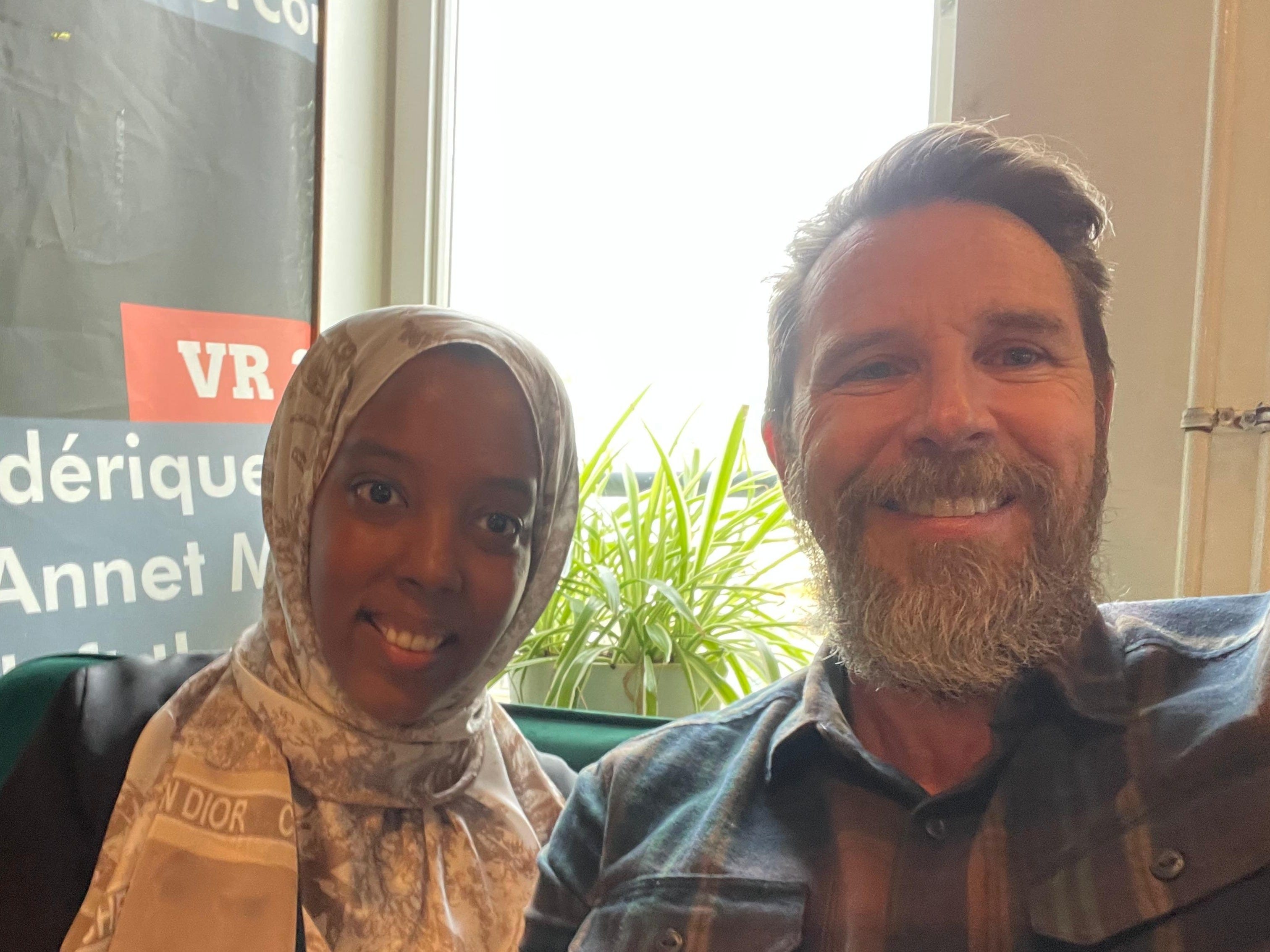
A month ago, a friend and I were asked to be part of a documentary about communities. Nawal is a Somali/Swedish dentist and young mother of two. Although we live in the same area, we would never have become friends if it weren’t for our shared interest in writing books. Nawal joined our Tuesday writing group four years ago and immediately started knocking down some of my carefully constructed prejudices. For one, she was rather loudmouthed. (I know, the pot calling the kettle black.) She wrote stories about axes in rib cages and people hanging from trees—and they were good. Scary, gory, unflinching. Not what I expected from a Muslim dentist. I realised for the umpteenth time how important it is to have the opportunity to be surprised by people. How healthy it is to be confronted by differences—and frankly—how healthy it is to be confronted, full stop. No one becomes a well-rounded person in an echo chamber.

Maaik and I are in Brazil right now, and in preparation for the trip, we thought we should learn some sick moves, so we signed up for a class with Salsa te Gusta—I think that’s Spanish for ‘A Gust of Salsa.’ (We later learned Salsa is Caribbean, not Brazilian, but that’s beside the point.) As you can imagine, as middle-aged, rhythm-resistant Anglo-Saxons, we weren’t the best dancers in the room. In between demonstrations of ungainliness, I hid in the shadows and noticed this old, geeky-looking bald guy on the floor. He had the Salsa moves and was dancing and laughing with lots of young women. There was nothing flirty or inappropriate about this interaction with his dance partners, and both parties seemed to be having a blast. It occurred to me that just 20 metres away, out on the pavement, that guy wouldn’t get within a mile of these women. But in that room, with nothing more than a shared interest, the impossible became not only possible, but enjoyable.
That’s community—an environment that elevates your individual state. But it’s not free. You have to turn up, leave behind your position outside the group, be willing to look a little foolish, be the awkward new guy who doesn’t know the rules, be annoyed by people you’d normally never have to meet and hear opinions that would make your friends wince. What you get out of it may be hard to pin down, but if we think back to the geeky dancer for a moment, I don’t know what that guy’s life situation is, but I’ll bet you an arm and a leg that it’s better because of Salsa te Gusta.
More good work Luc
Well written. Love the citation.